

Writing May Have Begun 40,000 Years Ago
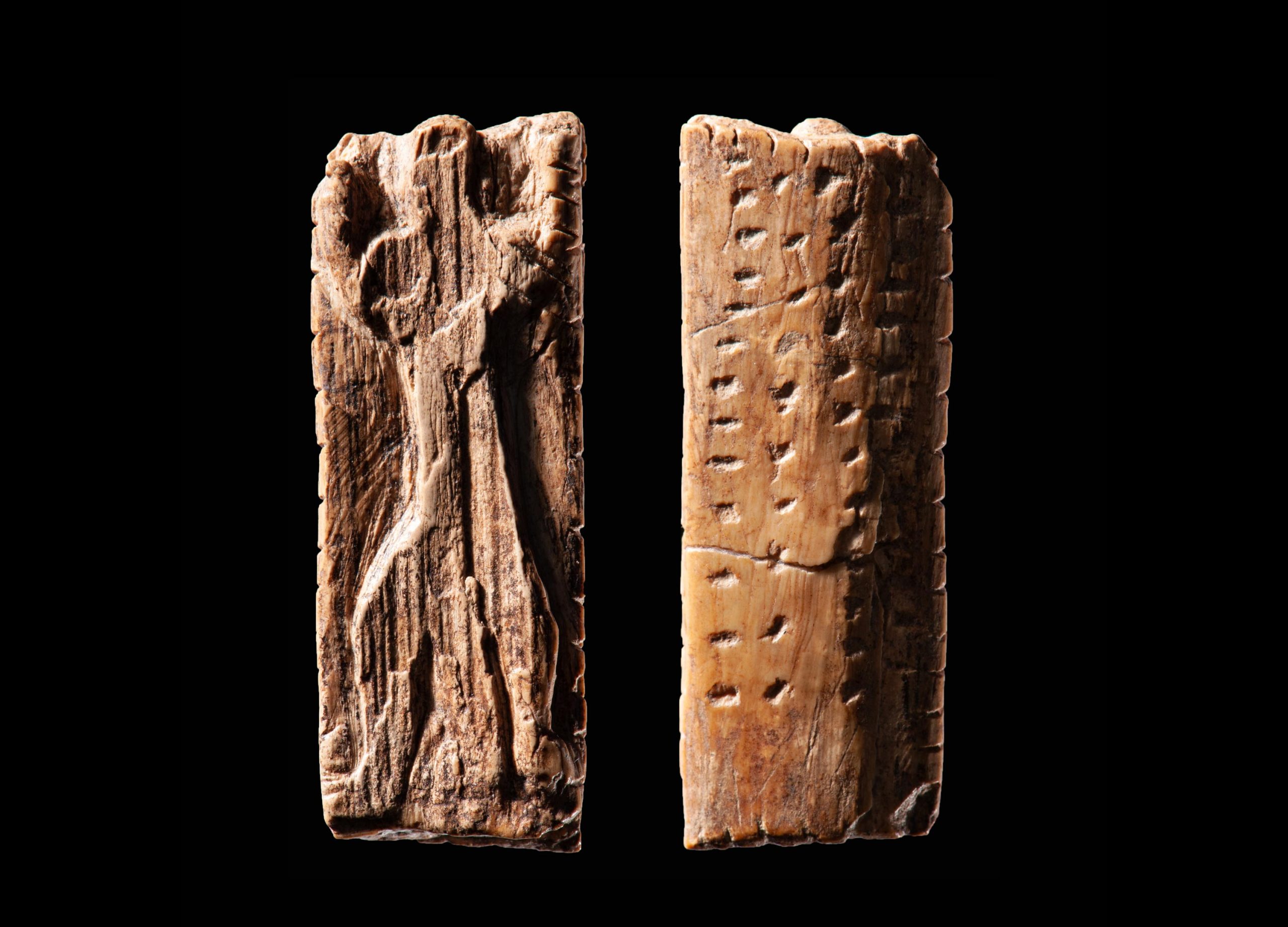
Ancient carvings once thought decorative may actually be early attempts to record information. Their statistical complexity matches that of proto-cuneiform, pushing the origins of writing-like systems back over 40,000 years.
More than 40,000 years ago, early humans were already engraving marks onto tools, figurines, and other objects.
A new study by linguist Christian Bentz of Saarland University and archaeologist Ewa Dutkiewicz of the Museum für Vor- und Frühgeschichte (Museum of Prehistory and Early History) in Berlin suggests these markings were more than decoration. Their analysis shows that the sequences of signs have a level of complexity and information density comparable to proto-cuneiform, the earliest known writing system, which appeared around 3,000 B.C.E., tens of thousands of years later.
Using computational methods, the team examined more than 3,000 signs carved onto 260 Paleolithic objects. The goal was to better understand how early humans encoded information long before formal writing emerged. The results, to be published in PNAS, were striking and even surprised the researchers.
Mysterious Carvings in the Swabian Jura
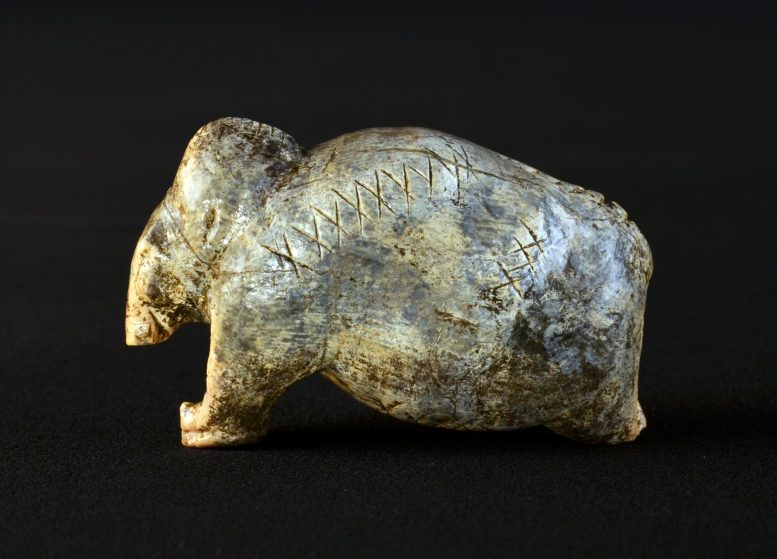
Artifacts dating from 34,000 to 45,000 years ago display repeated patterns of lines, notches, dots, and crosses. Many were discovered in caves in the Swabian Jura region of southwestern Germany. In Vogelherd Cave in Lone Valley, for example, archaeologists uncovered a small mammoth figurine carved from mammoth tusk. The figure is carefully engraved with rows of crosses and dots.
Other discoveries from the region include the ‘Adorant’, a mammoth ivory plaque found in Geißenklösterle Cave in the Ach Valley. It depicts a lion-human hybrid and is decorated with lines of dots and notches. Another well-known sculpture, the Lion Human from Hohlenstein-Stadel Cave in Lone Valley, also features evenly spaced notches along one arm.
Researchers now say these markings were intentional and meaningful. Stone Age people likely used them to store or transmit information. “Our research is helping us uncover the unique statistical properties – or statistical fingerprint – of these sign systems, which are an early predecessor to writing,” explains Professor Christian Bentz of Saarland University.
A Widespread Paleolithic Sign System
According to Dutkiewicz, the Swabian Jura is one of several regions where such marked objects have been found. “The Swabian Jura is one of the regions where objects with this type of sign have been found most frequently, but there are, of course, other important regions. Countless tools and sculptures from the Palaeolithic, or the Old Stone Age, bear intentional sign sequences,” she says.
The two researchers travel across Europe to museums and archaeological sites to document additional examples. “There are many sign sequences to be found on artefacts. We’ve only just scratched the surface,” says Dutkiewicz, who is a research associate and curator of the Stone Age department at the Staatliche Museen zu Berlin.
These objects date to a time long before established writing systems, when Homo sapiens had recently migrated out of Africa into Europe and encountered Neanderthals. Through a European Research Council funded project, the team is investigating how these early humans used visual symbols to encode information.
Comparable Complexity to Proto Cuneiform
The researchers focused on measurable features of the signs rather than trying to interpret their meanings, which remain unknown. “There are plenty of theories, but until now there has been very little empirical work carried out on the basic, measurable characteristics of the signs,” explains Bentz.
By studying how often particular signs appear and how predictable they are within sequences, Bentz compared Paleolithic markings to early cuneiform and modern writing. “Our analyses demonstrate that these sign sequences have nothing to do with the writing systems of today, which represent spoken languages and are characterized by high information density. In contrast, the signs on the archaeological objects are frequently repeated – cross, cross, cross, line, line, line. This type of repetition is not a feature found in spoken language,” he says.
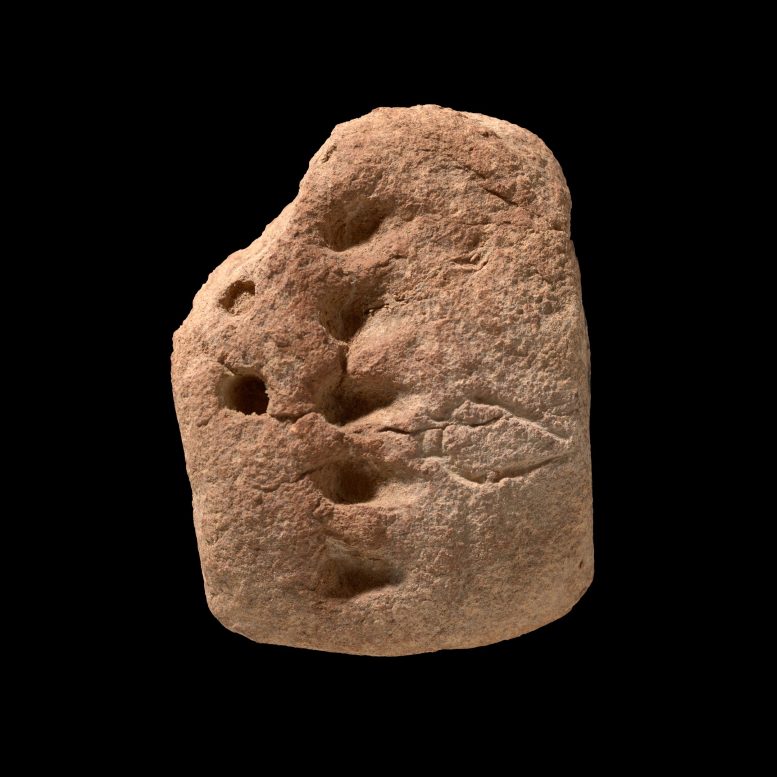
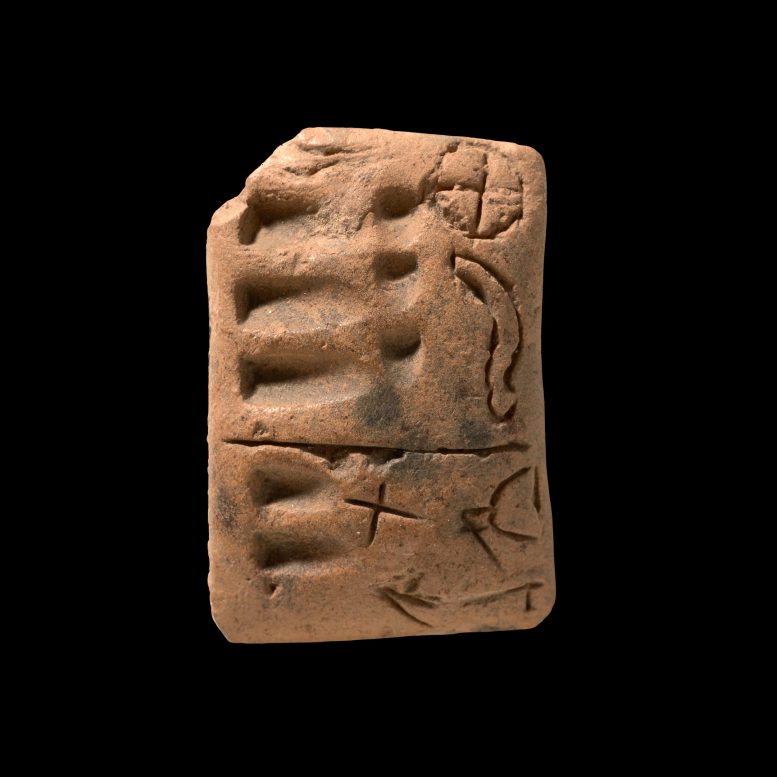
However, the team found that the overall information density of these Paleolithic symbols is statistically similar to early proto-cuneiform tablets from ancient Mesopotamia. “Sign sequences in proto-cuneiform script are also repetitive, and the individual signs are repeated at a similar rate. In terms of complexity, the sign sequences are comparable,” Bentz explains. Dutkiewicz adds, “Figurines exhibit higher informational density than do tools.”
The similarity was unexpected. “We hypothesized that the early proto-cuneiform script would be more similar to the writing systems of today, especially due to their relative proximity in time. Yet the more we studied them, the clearer it became that the early proto-cuneiform script is very similar to the much older Palaeolithic sign sequences.” Around 5,000 years ago, a new type of writing emerged that directly represented spoken language and displayed very different statistical patterns.

Computational Analysis and Information Theory
To conduct the study, the team digitized sign sequences into a database and analyzed them using tools from quantitative linguistics, including statistical modeling and machine learning classification algorithms. They assessed how much information the signs could potentially convey and compared this capacity with that of proto-cuneiform and modern writing.
“Because of the high rate of repetitions and the high predictability of the next sign, we were able to show that the entropy – a measure of information density – is comparable to that of proto-cuneiform, which came much later,” says Bentz. He notes that humans have been developing systems for encoding information for tens of thousands of years. “The human ability to encode information in signs and symbols was developed over many thousands of years. Writing is only one specific form in a long series of sign systems.”
He also points out that encoding remains central to modern technology. “We continue to develop new systems for encoding information. Encoding is also the basis of computer systems.” Large language models, one of the most visible forms of artificial intelligence today, depend on the predictability of language sequences to determine which word or word fragment is likely to appear next.

What Were Ice Age Humans Recording
The study does not determine exactly what these Stone Age people were documenting. “But the findings can help us to narrow down potential interpretations,” says Dutkiewicz. Although modern societies benefit from thousands of years of accumulated knowledge, anatomically modern humans of the Paleolithic period had cognitive abilities comparable to our own.
The ability to record and share information may have helped coordinate social groups or improved survival. The objects themselves suggest they were meant to be carried. “They were highly skilled craftspeople. You are able to see that they carried the objects with them. A lot of the objects fit right in the palm of your hand. That is another way in which the objects are similar to proto-cuneiform tablets,” Dutkiewicz explains.
Reference: 23 February 2026, Proceedings of the National Academy of Sciences.
DOI: 10.1073/pnas.2520385123
This work is part of the project ‘The Evolution of Visual Information Encoding’ (EVINE), funded by an ERC Starting Grant from the European Research Council. Professor Christian Bentz joined Saarland University in 2025 and leads the EVINE project, which began at the University of Tübingen and later continued at the University of Passau at the Chair of Multilingual Computational Linguistics. Together, Bentz and Dutkiewicz are exploring how visual systems of communication evolved from the earliest symbolic marks to the writing systems used today.
Never miss a breakthrough: Join the SciTechDaily newsletter.
Follow us on Google and Google News.
Source link
